tradeswomen
Welcome Leah Rambo to the National Taskforce on Tradeswomen’s Issues
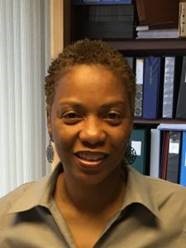
The National Taskforce on Tradeswomen’s Issues recently announced that Leah Rambo is now serving as the new Co-Chair of the National Taskforce on Tradeswomen’s issues.
Leah began her career as a sheet metal worker in 1988 and after working 10 years in the field, she was appointed as a full-time instructor, becoming the first woman to hold this position. She continues to hold the position of Director of Training for SMART Local 28, where her primary responsibility is training Local 28’s 521 apprentices and 2,300 Journey and Light Commercial workers!
Leah currently serves on the New York City Department of Education’s Career and Technical Education Advisory Council and Gender Equity Committee and is the Co-Chair of the NYC Coalition for Women in Construction. Leah holds a BA in Labor Education and several trade certifications.
To learn more about Leah Rambo and her journey into the trades, watch this video interview with Leah published last year!
Blockhead: New Book by Oregon Tradeswomen TACC Graduate

In her creative nonfiction collection Blockhead, Grace Covill-Grennan documents her experiences working as a carpenter in the building trades, exploring the intersection of issues of gender, class, craft, and labor and how it all plays out on the job site. She uses hybrid-genre pieces—vignettes, character sketches, memories, and poetry—while attending to the issues of gender and class providing constant discomfort.
Grace will be in Portland for the book release event at Black Hat Books!
November 15, 2019
7:00 pm
Black Hat Books
2831 NE Martin Luther King Jr Blvd.
Portland OR 97212
You may also purchase your copy of her handmade and numbered book from Another New Calligraphy.
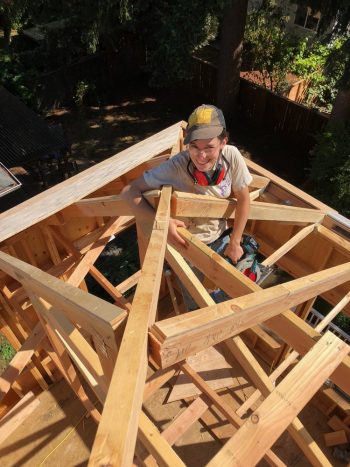
Changing the Skyline, Changing Lives
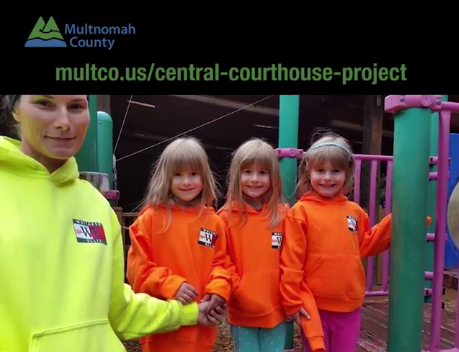
Oregon Tradeswomen is proud of our contributions to the Multnomah County Courthouse building – a project reflecting our shared values of diversity within its workforce, clients, contractors, and the community as a shared prosperity model. In alignment with Multnomah County’s commitment to advancing cultural diversity and social equity in the workforce, Oregon Tradeswomen is working to support these same goals.
The County and the general contractor for the project, Hoffman Construction, set specific diversity and equity goals and built a diverse team of subcontractors. The team is tracking progress toward these goals on monthly basis to ensure the principals of diversity, equity, and inclusion are making an impact in real time on the job and for our region’s workforce and minority contractor community.
In addition to working with Oregon Tradeswomen, Multnomah County and Hoffman Construction are working with subcontractors and other Bureau of Labor and Industries (BOLI) certified pre-apprenticeship training programs on recruitment, training, and retention of women and minority workers across trades, and continuing to foster a welcoming and safe workplace environment where workers and emerging firms have opportunities to grow and succeed. View the latest diversity dashboard for all the reporting metrics.

Thanks to an investment by Oregon’s Bureau of Labor and Industry, Oregon Tradeswomen was able to introduce a bystander intervention model to reduce hazing, harassment, and bullying, which disproportionately affect women and minorities on the job-site. The County and Hoffman Construction committed to implementing and testing this pilot model to evaluate the impact on worker satisfaction, safety, retention, and workplace equity. To date, the project has seen some successes in building a respectful workplace model, hearing from tradesworkers on the jobsite who have expressed the difference on working on a construction site that has a commitment to ending harassment and discrimination.
Because of these intentional policies, tradesworkers like Oregon Tradeswomen graduate, carpenter, and mother of triplets, Heather Mayther, now have access to careers that provide financial stability for their families as well as the pride that comes with building up their communities. Recently, Multnomah County produced a short video telling the stories of Heather and fellow tradesperson, Shawn Story, and how their involvement in this project has transformed their lives. Stories like Shawn and Heather’s are valuable as they help people outside of the construction industry understand that these jobs can lift people out of poverty and into the middle class. Multnomah County Chair Deborah Kafoury showed this video as part of her State of the County address and declared, “I am proud that these public projects are changing the Portland skyline, but I am most proud that they are changing lives.”
LinkedIn Learning Teaches Construction Fundamentals
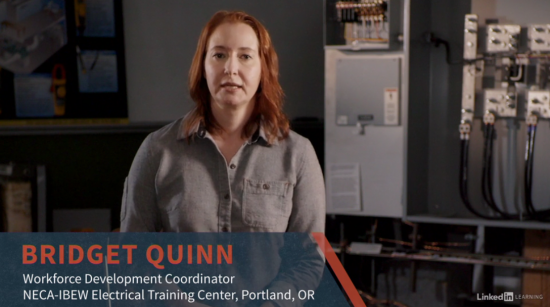
In 2018, Mary Ann Naylor, Oregon Tradeswomen’s Communications and Marketing Director, was approached directly by Linda Sellheim of LinkedIn Learning, also known as Lynda.com, a massive online learning resource for professional development. Linda was interested in creating a video series for LinkedIn Learning exploring careers in the construction trades, what working those jobs entails, and dispelling myths about the trades along the way. Most importantly, she was looking for a tradeswoman to be the face and voice leading the series!
After a productive meeting with Oregon Tradeswomen’s Development and Communications team, we directed Linda to the NECA-IBEW Electrical Training Center (NIETC) and our friend Bridget Quinn, who works as their Workforce Development Coordinator. We knew Bridget would be a prime candidate to lead a series on construction fundamentals. Not only is Bridget a Journey-level tradeswoman, but her role at the NIETC revolves around working with prospective apprentice-applicants to provide them with resources and guidance needed to successfully access union apprenticeship. Bridget is also a huge ally for Oregon Tradeswomen when we hold our Annual Career Fair at the Electrical Training Center and is a recipient of the Daily Journal of Commerce’s Women of Vision Award in 2017!
We are pleased to share links to the LinkedIn Learning track featuring Bridget Quinn. Videos are live on LinkedIn Learning and we encourage you to preview this incredible resource we hope will help many understand and access the world of the construction trades!
From Pre-Apprenticeship to Business Owner!

Oregon Tradeswomen has the privilege of meeting some truly amazing women during every Trades and Apprenticeship Career Class (TACC) we hold, and our most recent graduating class was no exception. Janet Huerta decided to embark on a new path after the tragic passing of both her parents on the same day and she enrolled in TACC.
Janet had worked in social services for decades, assisting survivors of abuse. Both her father and step-father were woodworkers, her brother started his career in framing as a teen, and her nephew is a laborer, so tools and workshops were familiar to Janet. A particularly harsh winter in central Oregon one year devastated the house that Janet had called home for 20 years and due to the high demand for skilled tradespeople, she was unable to get help to fix the damage the ice had wreaked. This dilemma sparked a question in Janet’s mind: “Why can’t I do this?”
When she quit her job to care for her parents full-time, this question stuck with her. Janet connected with Oregon Tradeswomen’s Outreach Coordinator, Anjeanette Brown, at a Women’s Foundation of Oregon event, and began her relationship with Oregon Tradeswomen as a donor. After the passing of her parents, Janet’s brother encouraged her to begin volunteering with Habitat for Humanity, which would give her an even better idea if this new path would be a good fit. Janet soon discovered that most of the other volunteers were retired tradespeople whose experience allowed them to take first dibs on certain parts of the building process. Unfortunately, Janet wasn’t getting training opportunities as fast as she would have liked.
In May of 2018, Janet attended Oregon Tradeswomen’s annual Career Fair which solidified her interest in pre-apprenticeship. After the event, she made sure to check the Oregon Tradeswomen website every day to make sure she didn’t miss the opportunity to register for the Fall TAC Class. Not only did she register for TACC, but she caught it two-handed. The 8 weeks of TACC flew by and, surprised by how well she did, Janet proved to herself that with baby steps, her goals were attainable. In her own words, Janet says, “the most valuable part of pre-apprenticeship is the chance to let go of any fear or self-doubt that holds all of us back from trying new things and finding out ‘We Can!’ It is what happens for everyone here whether it is intentional or not. Oregon Tradeswomen creates a space to overcome fear or doubt and instills an internal mechanism to problem-solve anything.”
Janet went on to complete our Environmental Worker Training Track with a HAZWOPER (Hazardous Waste Operations and Emergency Response) certification, and on her last day of training, she was approached by a family friend who needed a toilet installed. Feeling confident in her abilities, she recruited a classmate, and they set off to lend a helping hand. Having successfully executed her first gig, Janet knew she could turn this into a business! And from that thought emerged The Build-It Sisters, a business based in Sisters, Oregon that Janet hopes to expand to hire Oregon Tradeswomen graduates and other women. With more work already lined up through word-of-mouth, Janet’s goal is to go above and beyond other contractors, skillfully completing jobs and leaving spaces nicer than they were before.
There are so many paths for our graduates to explore when they leave pre-apprenticeship and we love to hear about all the creative ways they take the skills learned during class and apply them in the work-force. Not only do we need women in apprenticeship, but we also need more female contractors and business owners. We wish Janet the best in her endeavors and cannot wait to share in the successes of her and her trades sisters!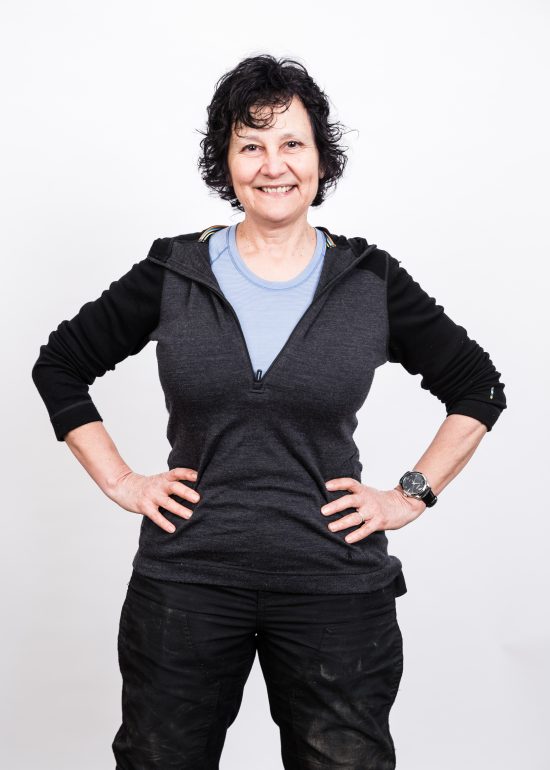
Oregon Tradeswomen Grads on a Path to Leadership with Skanska
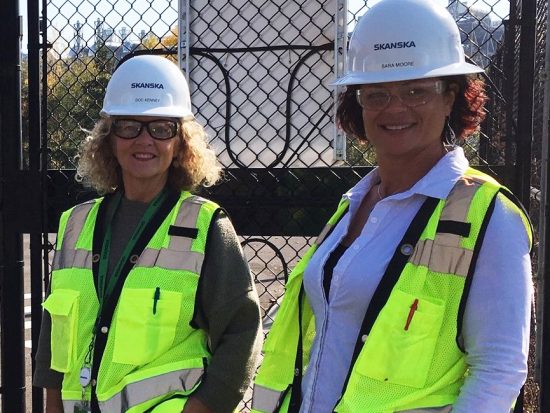
This past summer, Skanska USA Building and Oregon Tradeswomen partnered to recruit candidates for local, career-path field engineer positions. Skanska, one of the largest, most financially sound construction and development companies in the U.S., created the position to develop an entry-level path to leadership and management.
Field engineers support project engineers, superintendents and project managers. They hold key roles in ensuring the safe execution of activities, which include supervising day-to-day field teams, co-creating site logistics plans, conducting quality inspections, coordinating site testing and inspections, and managing schedules.
Oregon Tradeswomen helped the Skanska team identify local woman who possessed the skill-set sought for the new position.
Oregon Tradeswomen recently talked with Katie Coulson, LEED AP, Vice President – Account Manager with Skanska USA Building Inc. and former member of Oregon Tradeswomen’s Board of Directors, to learn a little more about this new leadership-track position. The fact that these new positions are being created to help manage one of Skanska’s most complex construction projects demonstrates its commitment to growing talent and making opportunities available for advancement. Of the handful of workers hired as the first field engineers, two are Oregon Tradeswomen graduates. Congratulations to Sara Moore and Doc Kenney!
In talking with Katie, we learned that Skanska is exploring ways to move more women into leadership roles. The new field engineer role provides an opportunity to work closely with field superintendents and grow into leadership roles. The leadership pipeline is critical for Skanska and provides a pathway there.
Skanska has a long commitment to hiring diverse workers. Katie explained, “It is this structure that helps make it a great company for women to work and grow in their careers. There are numerous women working on this project in leadership positions such as a general foreman, superintendent, project manager, director of safety, and many women on work crews.”
Katie further explained the growth path for this position. “This is an important and timely training ground to understand various aspects of construction from an individual contributor to a leadership role. The field engineer position will manage and prioritize safe working conditions, and will have key responsibilities working with crews, project managers, schedules, as well as getting trained on all of the aspects to move into a superintendent role.”
We didn’t want to fish for compliments, but we were curious about any standout qualities the newly hired Oregon Tradeswomen graduates, Sara Moore and Doc Kenney, exhibited. We learned that being driven, along with their problem-solving skills are important qualities for leadership. Skanska’s hiring team also values their understanding that even though the challenges that arise can be difficult, it is equally exciting to work through those issues to deliver a great product. Above and beyond those qualities, having good communication skills to work with multiple people is a key part of the position.
The opportunities in construction and other skilled trades might be better now than at any time in past. As society changes, more opportunities for women and minorities are opening, and construction is an incredible and dynamic industry with many paths for jobs with growth opportunities and benefits. This diversity is a benefit to the entire workforce, and success breeds success.
We applaud Skanska for their commitment to providing growth and leadership opportunities to women and racially diverse workers, and are incredibly excited for Oregon Tradeswomen graduates, Sara and Doc, on this exciting and well-deserved achievement.
About Skanska USA:
Skanska USA’s local operations comprise the Oregon and Southwest Washington regions, and in 2017 had gross revenues of $907 million. The 2017 combined Oregon and Washington gross revenues totaled $1.41 billion.
It is one of the largest, most financially sound construction and development companies in the U.S., serving a broad range of clients including those in transportation, power, industrial, water/wastewater, healthcare, education, sports, data centers, government, aviation, life sciences and commercial. Headquartered in New York with offices in 31 metro areas, we have nearly 11,000 employees committed to being leaders in safety, project execution, sustainability, ethics and people development. In 2017, our work in building construction, civil and power/industrial construction, commercial development and infrastructure development (public-private partnerships) generated $7.3 billion in revenue. Global revenue of parent company Skanska AB, headquartered in Stockholm and listed on the Stockholm Stock Exchange, totaled $18.8 billion in 2017. Skanska shares are publicly traded in the U.S. on the OTC market under the symbol SKBSY through a Level I American Depository Receipt program.
The Journey of a Female Locomotive Engineer
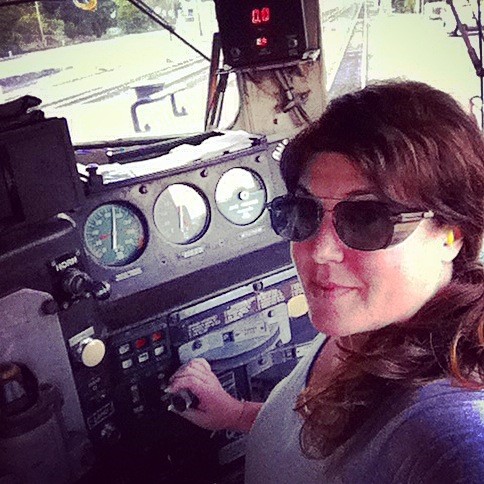
Huffing and puffing along, a 7,000 foot freight train curves gracefully around the Columbia River Gorge. Jessica Hassler, locomotive engineer extraordinaire with BNSF Railway, looks out the side-view mirror of the cab at the 16,000 tons she has been vigilantly guiding for hundreds of miles. She feels pride welling up inside her as she safely and smoothly handles the power of this great machine.
Jessica has been a Locomotive Engineer for 7 years now and has been with the railroad as a whole for 10 years. Before her foray into the world of locomotives, Jessica was a creative ‘jack-of-all-trades’. Armed with a Bachelor’s of Fine Arts in Illustration, she supported herself by doing freelance work. She was contracted by advertisers and restaurants to draw for them, but the work wasn’t conducive to ensuring a stable future; the market for creatives in Portland was, and continues to be, saturated. Jessica also opened up her own food truck, but after 3 years, decided that being an entrepreneur was not for her if she wanted to have job-security, health insurance, and to one day own a home.
She heard from a friend that BNSF Railway was looking for switchmen and conductors and that the work was well compensated and Union protected. In 2008, she took a chance and applied to BNSF Railway. She was hired as a switchman/conductor and worked for 6 months before getting furloughed. The furlough, while incredibly inconvenient, was a perfect segue into Oregon Tradeswomen’s Trades and Apprenticeship Career Class (TACC).
Jessica was at a loss as what to do until someone pointed her in the direction of Oregon Tradeswomen. Growing up in North Dakota, Jessica never considered the skilled trades or blue-collar work an option, as it was mostly men who filled those jobs, but going through Oregon Tradeswomen’s pre-apprenticeship training program, a whole new world opened up for her. During the summer of 2009 when Jessica was enrolled in TACC, she developed an interest in becoming a lineman with Bonneville Power Administration. One of the most valuable things she experienced during Oregon Tradeswomen’s class was the opportunity to learn math in a way that made sense to her. Jessica never saw math and numbers as things that came easily to her, but in TACC, math was broken down in a way that she could access. TACC was also a supportive environment where she felt like she could ask as many questions as she needed about anything.
Soon after graduation from TACC, BNSF ended Jessica’s furlough and she decided to go back and work as a switchman. Even though she didn’t go on to pursue the electrical trade, Jessica reflects on her time in the TACC program fondly, saying that: “Oregon Tradeswomen picked me up when I didn’t know what to do. It helped me realize that even if the railroad didn’t work out, there were other options in store for me.”
And so, it was “Take Two” for Jessica. Hired on as a switchman, she switched cars, serviced local industries, and built trains for departure to their next destinations. Working on the railroad can be a very challenging job. While not for everyone, it is a place for someone who thrives on variety. You are on the railroad’s whim as you are on-call 24/7 and Jessica says that it is up to you to make the best of worst of it. Jessica made the best of it and after three years working on the ground, she took the promotion to become a Locomotive Engineer.
Throughout her time at BNSF Railway, the men that she worked with were nothing but welcoming and genuinely thrilled to have a woman join the crew. When she just got hired on, she was fearful of harassment or hazing, but instead she felt respected by the men who were all so generous to teach and share their tips and tricks. The men on her crew understood that she was their teammate and that if she succeeds, they succeed. Jessica calls them the family of men she never expected to have. There is irony in how Jessica found support, success, and a sense of equality at the railroad, a place people don’t expect women to work. BNSF does have a very strict harassment policy, but Jessica recounts that in her case, the culture has been so positive that it never needed to be enforced. Even ten years ago things were much harder for women on the railroad, but since then, the culture has evolved for the better.
To the women who are curious about joining BNSF, Jessica Hassler says, “Just do it! Be open and be brave. Drop the attitude and the ego and go into it knowing nothing with nothing to prove. Believe you can do it and allow yourself to learn it.”
10 years with BNSF Railway has flown by for Jessica and she has all that she once dreamed of: a rewarding job that offers great benefits, belonging to thee BLET Union, owning a home, owning a car, and she has the economic stability she always dreamed about. She even met her life partner through her job with BNSF.
So what does the future look like? Jessica can see herself sticking with it for another 20 years followed by happy retirement. As long as she can sustain the lifestyle, there is no reason not to go all the way to retirement.
Life may not always end up how you thought it would, but sometimes the reality you end up with is even better than anything you could have imagined. It is important to take things in stride and keep your options open. Who knows, you might discover something life-changing like Jessica did!
Oregon Tradeswomen’s Executive Director Reflects on Women’s History Month
During the month of March in the United States, we officially celebrate women who’ve dedicated their lives to create a better future as “Women’s History Month”, tracing the event beginnings back to the first International Women’s Day in 1911.
We take this time to honor the many women in our nation’s history who fought for justice, equality, and equity, including Susan B. Anthony, Sojourner Truth, Lucy Stone, Lucretia Mott, Elizabeth Cady Stanton, Harriet Tubman, and Alice Paul. We honor our sisters in the labor movement who worked to ensure equal rights and equal pay in the workplace, such as Lucy Parsons, Mary Harris Jones, Leonora O’Reilly, Frances Perkins, Luisa Moreno, and Esther Peterson. We celebrate our sisters in more recent decades like Shirley Ware, Linda Chavez-Thompson, Mary Kay Henry, and others who continue to fight for our rights and for our future. We hold up the iconic symbol of our tradeswomen movement, Rosie the Riveter, reminding the world and ourselves, “We Can Do It!”.
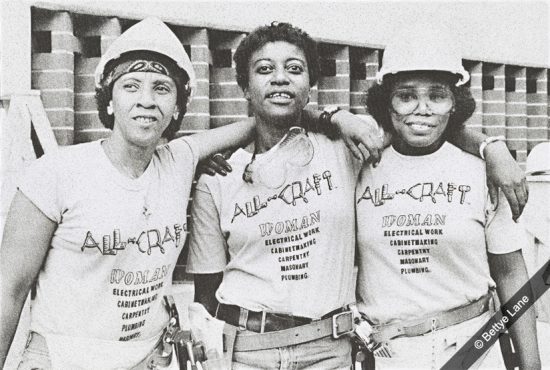
Tradeswomen, 1981. © Bettye Lane
This month, Oregon Tradeswomen would like to take a moment to honor and acknowledge the incredible contributions tradeswomen make each and every day. Here in Portland, across our state, and throughout our nation, tradeswomen are still pioneers in industries like construction, transportation, manufacturing, and rail, working to care for their families and build our communities. Up early and home late, our sisters are not just working for a paycheck, they are working for change. They are active mentoring, volunteering, working in their unions, participating in committees, and serving as role models. They vote, they organize, they donate time, talent, and dollars to our tradeswomen movement to impact change. They raise their hands, their fists, and their voices. Yet often, our sisters are not heard.
In this era of #MeToo, we need to stand strong in our support of, and in solidarity with tradeswomen. For far too long, women working in our industry have experienced sexual harassment at an alarming rate, and often at great personal cost. According to a bipartisan 2016 report of the Co-Chairs of the EEOC Special Task Force on the Study of Harassment in the Workplace, 88 per cent of female construction workers experience sexual harassment at work, compared to 25 per cent of women in the general workforce. Women leave the construction sector at a faster rate than their male colleagues, according to a 2014 report by the National Women’s Law Center – noting that in some trades, 70 percent of women leave before completing their apprenticeship training program, compared to 53 percent of men. The women who leave point to hostile work environments and sexual harassment as reasons for exiting.
At Oregon Tradeswomen, we are working to change our industry and create a different future – not just for women, but for all of our workforce. We know that when worksites are equitable and respectful, all workers benefit, not just women. Industry benefits too – studies show a decrease in employee turnover, greater productivity, increased job satisfaction and loyalty, and overall improved performance. Our work includes the recent implementation of a new model for shifting jobsite culture, and is currently being implemented at the Multnomah County Courthouse project. This bystander intervention model is demonstrating promises outcomes in creating respectful worksites. It is providing tools for the construction workforce to speak up, speak out, and make a difference. We look forward to sharing more in the coming months on this model, and in the meantime, we ask you to join us in honoring tradeswomen not just this month, but every day.

Kelly Kupcak
Executive Director of Oregon Tradeswomen
OTI Alumnae Spotlight: Aisley Deymonaz
Congratulations to Oregon Tradeswomen graduate, Aisley Deymonaz for winning an award at the Lineman Rodeo for the second time this year!
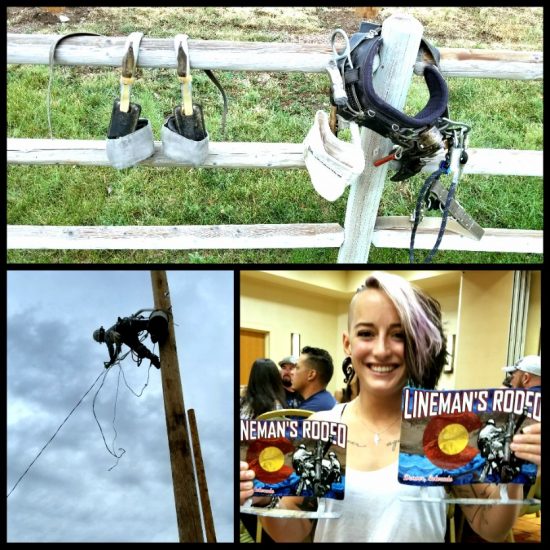
In Salt Lake City Aisley got 2nd place in the “mystery” rope splicing event. In Denver Aisley got 1st place in the “hurt man rescue” as well as 3rd place in another “mystery” rope event!” Way to go, Aisley!
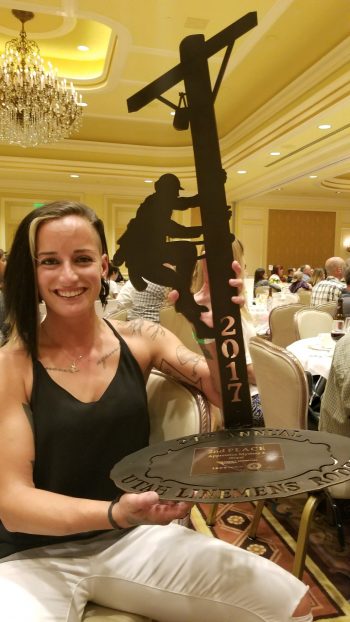
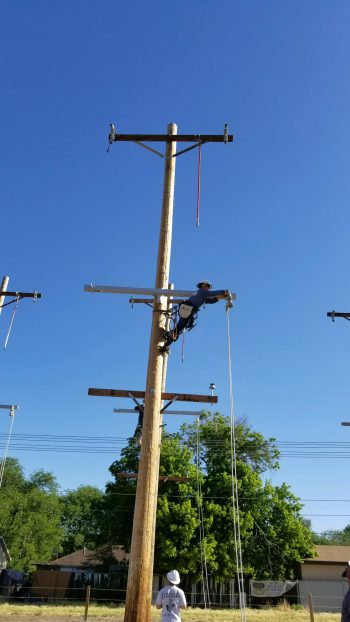
Alumnae Spotlight: Lisa Davis
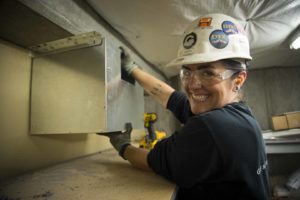
Lisa Davis has lived an incredibly full life for her short 34 years on this earth! She was born in New Mexico and completed most of her school years in California and Texas before moving back to California to attend UC Davis, where she would eventually earn her Bachelors of Science in Microbiology.
During college, Lisa’s goal was to become a surgeon and she did very well as a pre-med student, even receiving a coveted surgical internship at Baylor University in Texas. She moved to Portland, OR with the intention of attending medical school at OHSU, but reevaluated her goals upon her arrival and decided that she wanted to take her life in a different direction.
During her undergraduate studies, Lisa worked as a mechanic at a bowling alley, which helped her realize the similarities between humans and machines (when it comes to diagnosing and fixing the problem) and the satisfaction she got from working with machines. Once she moved to Portland, she worked for 2 years as a perfusion assistant, helping monitor the medical equipment that keeps patients hearts and lungs working during surgeries. This was an incredibly grueling, on-call position that often had Lisa working 20+ hours at a time and ultimately led her to leave due to burn out. After leaving this position she decided to move to Hawaii for a year where she held a myriad of positions – including trades related work.
She moved back to Portland in 2008, during the height of the Great Recession. Due to many lay-offs and the general nature of the labor market at that time, she struggled to find steady work. At one point in this time period, she held 3 part time jobs and was still unable to afford housing, which caused her to have no other option but to live in her truck with her partner until she could find more steady work.
Lisa eventually secured a position that allowed her to revisit her work as a Bowling Alley Mechanic. Unfortunately, as the only woman on the team of mechanics, she experienced a lot of misogyny and chose to leave this position due to the hardships she experienced. At this point, Lisa was downtrodden; feeling as though there was no place for women who were drawn to trades work. She sat down at her computer and typed “what can women do in the trades?” into her Google search bar and Oregon Tradeswomen, Inc.’s website popped up! From this moment the rest is history. Lisa quickly enrolled in OTI’s Trades and Apprenticeship Career Class (TACC) in 2008 at the age of 26.
During her time in TACC, Lisa fell in love with metal. OTI was able to help her take this love and narrow it down down into a viable career in the sheet metal trade. Lisa loves the industry for the breadth and depth it offers and for the fact that she would be entering a career that allowed her to do something different every day. After TACC, her OTI career counselor helped her secure funding in order to attend Clackamas Community College so she could increase her skills in welding and machining which would allow her to be more competitive in her chosen field.
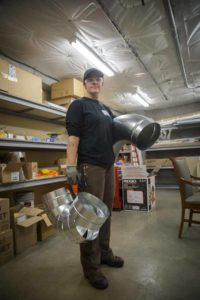
Lisa applied for a Sheet Metal Apprenticeship but had to wait almost 2 years to be accepted due to the scarcity of jobs during the Great Recession. Three months after her acceptance into the apprenticeship, she found a place with General Sheet Metal and primarily worked on architectural sheet metal, HVAC duct installation, and shop fabrication for her first couple years. Around this time General Sheet Metal decided to start their own service department and tapped Lisa’s shoulder to audition for their new Service Apprenticeship.
Lisa ended up doing both apprenticeships at the same time – completing the requirements for her Building Trades apprenticeship by day and dedicated her nights and weekends to specialized service classes. After she journeyed out, Lisa continued to work for General Sheet Metal and quickly moved into a foreman role. Within only a year of working at the Journeyman level, Lisa was recruited by the Sheet Metal Institute to develop and implement a Service Apprenticeship, like the one she had gone above and beyond for in her own apprenticeship.
Lisa comes from a long line of educators and felt drawn to teaching herself. Nowadays, she is providing guidance and mentorship to more than 200 new apprentices a year. Due in part to her enthusiasm for the role of women in the sheet metal industry, 7% of her students are women. This figure is higher than many other trades, though still has room for improvement. She is also teaching and doing some consulting work for the International Training Institute (ITI) and is participating in an exciting task force to write a book regarding the important work of the sheet metal industry. Not only does Lisa love her job but it PAYS! She makes about $43.75/hour which is just about 4 times greater than her highest pre-trades wage of $12.50/hour.
When asked what advice she has for other women looking to enter the trades Lisa confidently replied; “Our society has us convinced that we can’t do it. Not only are they wrong but we are wrong for believing it! Do it! Try it! Never limit yourself and never stop learning!”
Lisa is thrilled to have found herself in a dynamic career that allows her to use her hands and teach others a valuable skill. As for future plans? Lisa plans to continue learning as much as she can in this world and will see where that takes her. She plans to take a breath in 5 years or so to strategize about her next move. We are so glad to have Lisa in our community! Check her out in our Apprenticeship 101 video!